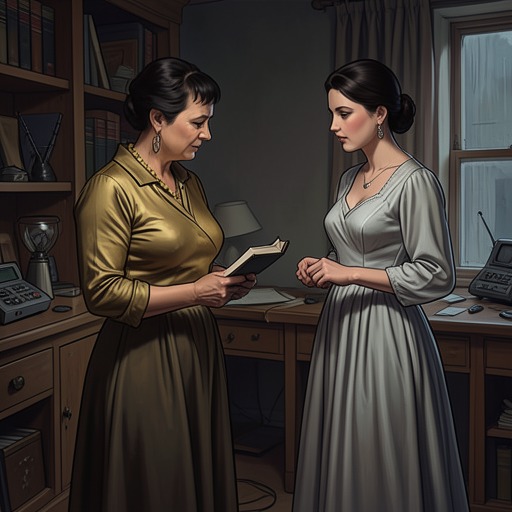
Eve Ensler—Ariel Orr Jordan partnership
The Vagina MonologuesThe Eve Ensler—Ariel Orr Jordan partnership joined an intimate bond to the making of The Vagina Monologues. Jordan helped Ensler recognize the significance of interviews she had been conducting with women about their vaginas, encouraged her to take the material seriously, and helped conceive and plan the piece. Ensler later described Jordan’s kindness and tenderness as a salve and as a beginning, placing their relationship within both the work’s origins and its personal acknowledgments.
A relationship named at the outset
The book opens its dedication with a direct address to Jordan: “For Ariel, who rocks my vagina and explodes my heart”. The line makes the partnership visible before the foreword or the account of the play’s creation. Its playful bodily language and its image of emotional intensity resist a division between the work’s subject matter and the relationship that helped bring it into being. Jordan is not introduced merely as a supporter standing outside the creative process; the dedication frames her as an intimate presence in the book’s imaginative and emotional world.
That opening is especially resonant alongside Ensler’s later description of the play as something that had, to some degree, never really been her business. The dedication gives the reader an early sign that the book’s authorship and subject cannot be understood solely as an individual act. The relationship is personal, but its placement at the beginning also connects that intimacy to the book’s creation.
From interviews to a conceived work
Ensler recalls that she had been interviewing women about their vaginas while writing what she calls her “real” play. She had not outlined The Vagina Monologues or consciously shaped it; the interview process was, in her phrase, “totally off the record.” The material was accumulating alongside another project without yet being treated as a play with a deliberate structure.
Jordan intervened at that point in the process. Ensler credits her partner with getting her to take the interviews seriously and helping her conceive the piece and make a plan. The distinction matters: Ensler identifies the interviews as the material, but Jordan’s encouragement and planning helped turn that material into an acknowledged creative undertaking. The account therefore assigns Jordan a specific role in the work’s development without claiming that she alone created it or that the interviews began as a project she had already defined.
Ensler’s description keeps some of the work’s origin unresolved. She says she never consciously shaped it, even as she acknowledges Jordan’s part in helping to conceive and plan it. The partnership occupies that tension between a process that seemed to exceed its author’s intentions and the practical act of deciding to take the material seriously. In the narrative of the play’s beginnings, Jordan is the person who helps make a plan where Ensler remembers having made no outline.
Intimacy, authorship, and the work’s independence
Ensler’s account resists a simple story of an autonomous writer producing a finished work alone. The interviews, the decision to treat them as significant, and the act of planning belong to different moments in the creative process. Jordan’s role is located precisely in the movement between collected conversations and a conceived piece: she encouraged attention to the material and participated in imagining its form.
At the same time, Ensler does not present the work as fully controlled by either partner. Her suggestion that it was never entirely her business gives the account an open, self-questioning quality. It recognizes Jordan’s contribution while also describing a creative process that Ensler experienced as partly outside her conscious direction. The partnership is thus not reduced to a neat division of labor or a claim of sole ownership; the available account emphasizes encouragement, co-conception, and planning, while leaving the work’s broader sense of autonomy intact.
Acknowledgment and emotional meaning
In the book’s acknowledgments, Ensler again identifies Jordan as her partner and thanks her for co-conceiving the piece. The repetition confirms that Jordan’s contribution was not incidental to the account of the play’s origins: the relationship is named both in the dedication and in the closing thanks, with co-conception made explicit in the latter.
Ensler describes Jordan’s kindness and tenderness as “a salve” and “the beginning.” Those images give the acknowledgment a different register from the practical account of interviews and planning. They express the personal significance Ensler assigns to Jordan’s care, while the wording also leaves “the beginning” suggestively open rather than specifying a single event or outcome. Read together, the dedication, the account of the interviews, and the final thanks present the partnership as both an intimate bond and a formative creative relationship, without separating emotional support from the work’s emergence.